The Pacific Ocean stretches endlessly beyond San Diego's coastline, holding secrets that have captivated adventurers for…
Winter Surfing: Why San Diego’s Waves Are Better in the Cold
Most surfers pack away their boards when temperatures drop, but San Diego’s winter surf season reveals the ocean’s best-kept secret. While others huddle indoors, experienced surfers know that December through March delivers the most powerful, consistent, and rewarding waves of the entire year.
The Science Behind Superior Winter Waves
Winter transforms San Diego’s coastline into a surfing paradise through a perfect storm of meteorological conditions. Pacific storms brewing thousands of miles away in the North Pacific generate powerful swells that travel across the ocean, arriving at our shores with incredible energy and consistency.
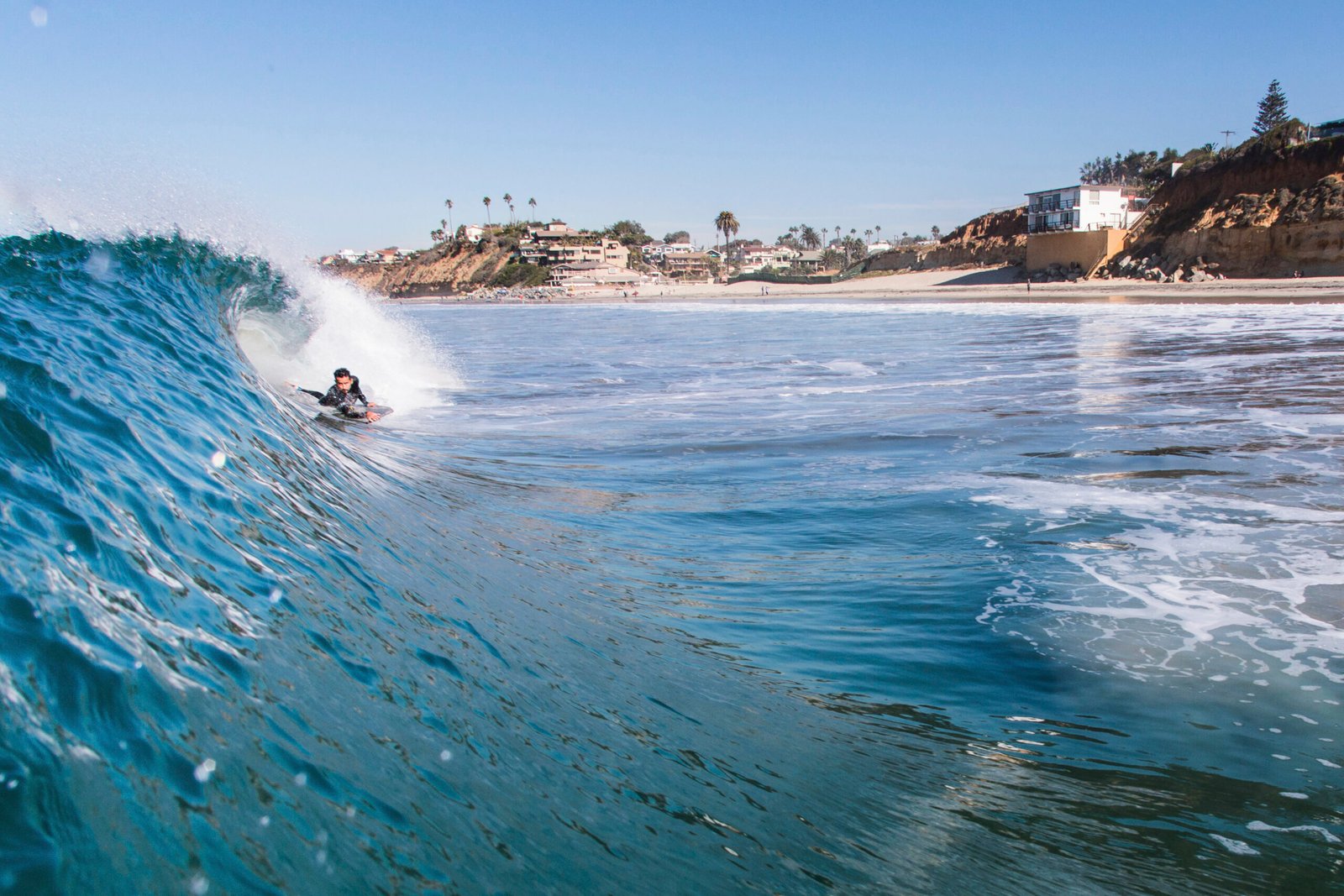
These winter swells pack significantly more punch than their summer counterparts. While summer waves typically range from 2-4 feet, winter storms regularly deliver 6-12 foot faces with occasional monster sets reaching 15+ feet at exposed breaks. The longer period between waves—often 12-20 seconds compared to summer’s 6-10 seconds—creates cleaner, more organized surf that breaks with thunderous power and pristine form.
The difference is immediately apparent when you paddle out on a crisp January morning and feel the ocean’s raw energy beneath your board.
Environmental Factors That Create Magic
San Diego’s unique geography becomes a wave-sculpting masterpiece during winter months. Our coastline faces southwest, perfectly positioned to receive the northwest swells that dominate winter weather patterns. The continental shelf’s gradual slope allows these swells to maintain their energy while organizing into perfectly formed waves.
Offshore winds, created by high-pressure systems over the desert, blow consistently during winter mornings. These winds groom wave faces to glassy perfection, creating the barrel-riding conditions that advanced surfers dream about. The combination of powerful swells and offshore winds produces waves that break with mechanical precision.
Water temperatures, while cooler at 58-62°F, remain surprisingly comfortable with proper gear. The crystal-clear visibility during winter months—often exceeding 20 feet—adds an ethereal quality to each session, with kelp forests swaying beneath your board and marine life more active in the nutrient-rich waters.
Premier Winter Surf Destinations
La Jolla Shores: The Perfect Learning Laboratory
La Jolla Shores transforms into a beginner’s paradise during winter months. The protected cove offers consistent 2-4 foot waves that break gently over sandy bottom, making it ideal for surfers developing their skills. The forgiving nature of these waves allows beginners to practice without the intimidation factor of more aggressive breaks.
Standing in the lineup at Shores on a winter morning, watching the sunrise paint the cliffs golden while perfectly shaped waves roll through, creates memories that last a lifetime.
Black’s Beach: Where Legends Are Made
Black’s Beach delivers world-class surf that attracts advanced surfers from across the globe. This clothing-optional beach offers powerful, hollow waves that break over sand and reef, creating both left and right-hand barrels. Winter swells transform Black’s into a testing ground for serious surfers.
The challenging paddle-out and powerful waves make this spot exclusively for experienced surfers. When conditions align—offshore winds, 8+ foot swells, and incoming tide—Black’s produces waves that rival any break in California.
Windansea: Technical Precision
Windansea’s reef break demands respect and rewards skill. The rocky bottom creates waves that break with surgical precision, offering both powerful walls and workable shoulders. Winter swells bring out Windansea’s true character, producing waves that challenge intermediate to advanced surfers.
The iconic palm tree overlooking the break has witnessed countless epic sessions, and the tight-knit local community maintains the area’s authentic surf culture. Windansea teaches surfers to read waves with mathematical precision.
Tourmaline: Longboard Heaven
Tourmaline Surf Park caters perfectly to longboard enthusiasts and intermediate surfers seeking longer rides. The gentle, rolling waves break over sandy bottom, creating extended walls perfect for cross-stepping and nose-riding. Winter swells add power while maintaining the break’s forgiving nature.
The designated surfing area ensures consistent access, and the nearby amenities make it family-friendly. Tourmaline proves that winter surfing doesn’t require extreme conditions to be incredibly rewarding.
The Crowd Advantage: Your Private Ocean
Winter surfing’s greatest hidden benefit lies in the dramatically reduced crowds. Beaches that swarm with surfers during summer months become virtually private playgrounds during winter. Popular breaks like Scripps Pier or Cardiff might host 50+ surfers on summer weekends but see fewer than 10 during winter sessions.
This crowd reduction creates multiple advantages:
- More waves per session – fewer surfers mean more opportunities
- Safer conditions – reduced collision risks and clearer lineups
- Enhanced learning environment – beginners can practice without pressure
- Deeper connection with nature – experience the ocean’s raw beauty without distractions
There’s something profoundly peaceful about sitting in a lineup with only three other surfers, watching pelicans dive while waiting for the next set.
Essential Winter Gear for Every Level
Beginner Surfers
- 4/3mm full wetsuit with sealed seams for warmth and flexibility
- Wetsuit boots (3mm) for reef protection and warmth
- Soft-top longboard (9-10 feet) for stability and safety
- Bright-colored rash guard for visibility and additional warmth
Intermediate Surfers
- 4/3mm or 5/4mm wetsuit depending on cold tolerance
- Wetsuit gloves (2-3mm) for extended sessions
- Performance longboard or funboard (8-9 feet) for versatility
- Wetsuit hood for extremely cold days
Advanced Surfers
- 5/4mm wetsuit with hood for maximum warmth during long sessions
- Wetsuit boots and gloves (3-5mm) for complete protection
- High-performance shortboard (6-7 feet) for critical wave riding
- Backup wetsuit for multiple daily sessions
Safety First: Winter Surfing Precautions
Winter surfing demands heightened awareness and preparation. Larger swells create stronger currents, and colder water increases fatigue rates. Never surf alone during winter months—the buddy system becomes crucial when conditions turn challenging.
Essential safety practices include:
- Check surf reports and weather conditions before heading out
- Inform someone of your surfing plans and expected return time
- Warm up thoroughly before entering cold water
- Stay hydrated and bring warm clothes for after sessions
- Know your limits – winter waves can humble even experienced surfers
Emergency contacts and local surf shops should be programmed into your phone, and basic first aid knowledge proves invaluable when surfing remote breaks during winter months.
The Transformation Awaits
Winter surfing in San Diego challenges everything you thought you knew about the sport. The combination of powerful waves, pristine conditions, and empty lineups creates an experience that transcends ordinary surfing. Each session becomes an adventure, each wave a teacher, and each winter a journey of growth.
The surfers who embrace winter conditions discover a deeper connection with the ocean’s power and beauty. They develop skills that summer surfing simply cannot provide, building confidence and technique that elevates their entire surfing experience.
Don’t let another winter pass without experiencing San Diego’s best-kept surfing secret. The waves are waiting, the crowds are gone, and the adventure of a lifetime lies just beyond the shore break.
Find Local Surf Schools → | Check Current Surf Conditions → | Winter Wetsuit Guide →
Ready to discover why San Diego’s winter waves are truly superior? Grab your wetsuit, wax your board, and prepare for the surf sessions that will redefine your relationship with the ocean.
More to Explore