
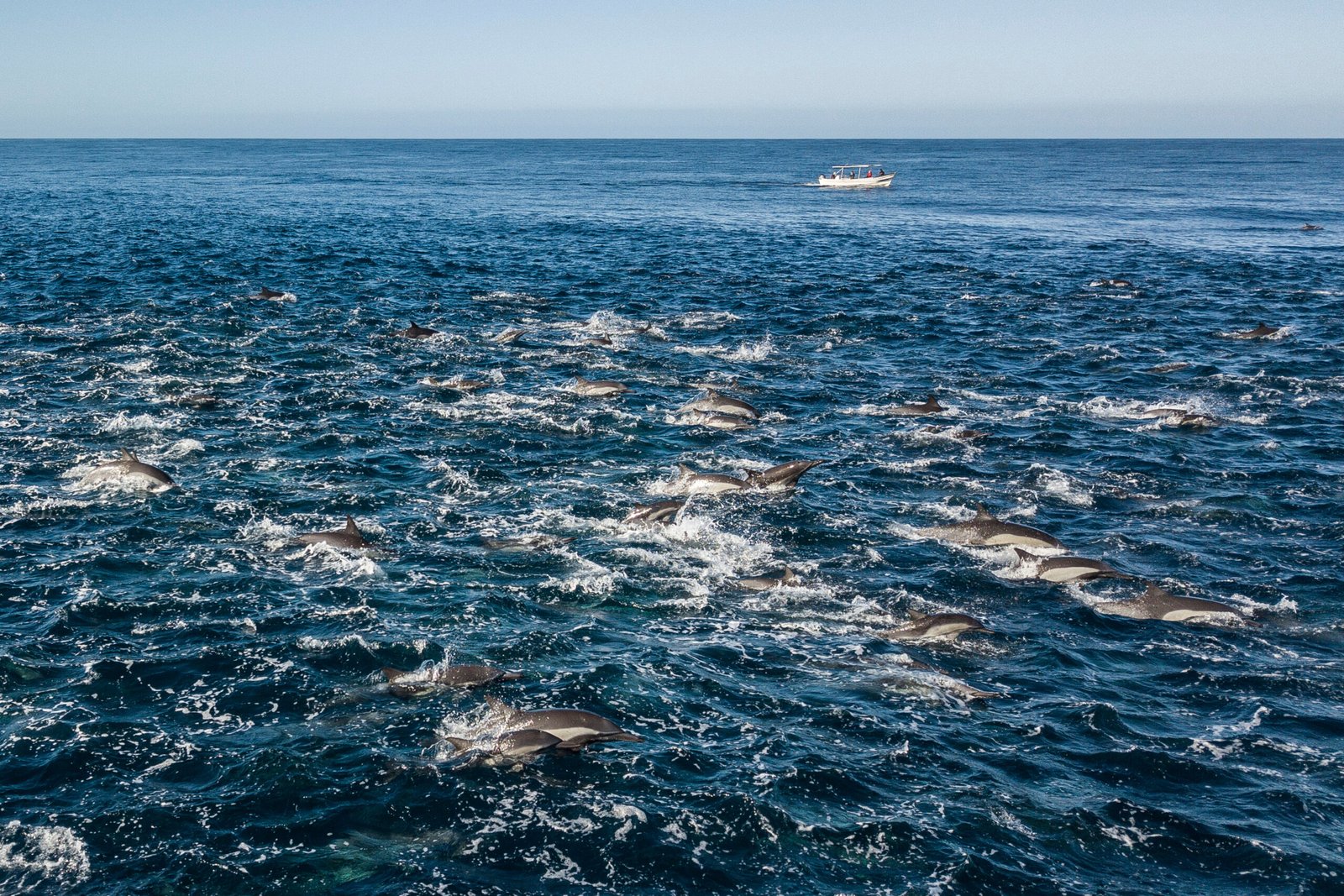
The Pacific Ocean stretches endlessly beyond San Diego's coastline, holding secrets that have captivated adventurers for…
San Diego – Gray Whale Migration: Front Row Seats to Nature’s Greatest Show
Every winter, the Pacific Ocean becomes a highway for one of nature’s most spectacular journeys. Gray whales embark on an epic 12,000-mile round trip from Alaska to Mexico, and San Diego sits perfectly positioned along this ancient migration route. With 20 years of marine wildlife expertise, we’ve witnessed countless magical moments as these gentle giants pass through our coastal waters.
Prime Viewing Locations: Where Giants Meet the Shore
Cabrillo National Monument stands as San Diego’s premier whale watching destination. The elevated cliffs provide unobstructed views of the migration corridor, where whales travel just 200 yards offshore. Park rangers report that visitors can spot whales 95% of the time during peak season.
Sunset Cliffs offers dramatic viewing opportunities where rugged coastline meets deep water channels. The whales’ distinctive heart-shaped spouts become visible against the golden Pacific backdrop, creating unforgettable photographic moments.
La Jolla Cove presents unique opportunities to observe mothers with calves seeking shelter in protected waters. Marine biology students frequently document nursing behaviors and protective formations from these accessible viewing points.
Book Your Whale Watching Tour →
Migration Timeline: Nature’s Clockwork Precision
The southbound journey begins in mid-December, as pregnant females lead the procession toward Baja California’s warm lagoons. Peak viewing occurs from January through March, when thousands of whales pass San Diego daily.
Northbound migration starts in February and continues through May, featuring mothers with newborn calves. These youngsters, born in Mexican waters, make their first journey past San Diego’s shores, often staying closer to the coastline for protection.
Population numbers have recovered remarkably – from near extinction in the 1940s with fewer than 2,000 individuals to today’s thriving population of approximately 27,000 gray whales.
Whale Behavior: Decoding the Giants
Gray whales demonstrate fascinating feeding adaptations during their journey. Unlike other whale species, they’re bottom feeders, using their baleen plates to filter amphipods and small crustaceans from seafloor sediments.
Calving information reveals remarkable maternal dedication. Newborns measure 14-16 feet long and weigh up to 1,500 pounds. Mothers fast during the entire 4-month nursing period, losing up to 40% of their body weight while producing 150 gallons of milk daily.
Spy-hopping behavior – when whales lift their heads vertically above water – occurs frequently near San Diego. Scientists believe this allows whales to navigate using coastal landmarks and assess surface conditions.
Conservation Success Story: From Brink to Abundance
The gray whale represents one of conservation’s greatest triumphs. Marine Mammal Protection Act implementation in 1972 provided crucial legal protection, while international cooperation established protected calving lagoons in Mexico.
Habitat restoration efforts focus on maintaining clean migration corridors. San Diego’s coastal waters benefit from strict pollution controls and vessel speed restrictions during migration season.
Research initiatives utilize non-invasive tracking methods, including drone surveys and acoustic monitoring, providing valuable data without disturbing whale behavior.
Support Conservation Efforts →
Tourism Impact: Economic Waves
Gray whale migration generates $20 million annually in San Diego’s tourism revenue. Whale watching tours employ hundreds of local guides, boat operators, and marine educators, creating sustainable economic opportunities.
Educational tourism attracts marine biology students from universities worldwide. These programs contribute to ongoing research while fostering next-generation ocean stewards.
Responsible viewing practices ensure minimal impact on whale behavior. Tour operators follow 100-yard minimum distances and engine shutdown protocols when whales approach voluntarily.
Experience the Migration: Your Front Row Awaits
Standing on San Diego’s cliffs as a 40-ton gray whale surfaces nearby creates profound connections with nature’s rhythms. The thunderous exhale of their blow, the graceful arc of their backs, and the powerful thrust of their flukes leave lasting impressions on every observer.
Peak viewing times occur during morning hours when offshore winds create calm conditions. Binoculars enhance the experience, revealing intricate details of whale behavior and individual characteristics.
Photography enthusiasts capture stunning images using telephoto lenses and polarizing filters to reduce ocean glare. The golden hour provides optimal lighting for dramatic whale portraits.
Plan Your Whale Watching Adventure →
Building Tomorrow’s Ocean Stewards
Through expert planning and innovative educational programs, we’re building awareness of marine conservation throughout South Florida and beyond. Dependable whale watching experiences connect visitors with ocean ecosystems, fostering environmental stewardship.
Commercial and residential communities benefit from whale watching tourism, creating economic incentives for habitat protection. Your trusted marine wildlife partner in San Diego, we’ve earned our reputation through dedication to building smart conservation programs that meet both client goals and environmental needs.
Take a few minutes and join us for this incredible natural spectacle. Let’s build your connection with the ocean’s most magnificent travelers, together!
Reserve Your Viewing Experience Today →
The gray whale migration offers front row seats to nature’s greatest show, where ancient instincts meet modern conservation success. Every winter, San Diego becomes the stage for this remarkable journey, reminding us that with proper protection and dedicated stewardship, wildlife populations can recover and thrive.
Bring your dreams of marine wildlife encounters to life with our exceptional viewing opportunities and expert guidance. The whales are calling – will you answer?
More to Explore